Showing posts with label Conneaut Lake Bark Park. Show all posts

Thursday, June 25, 2015

14 Tips for Traveling With Your Dog

With the beginning of family vacations, it is time to once again remind our Bark Park members and friends to follow some simple guidelines when taking Fido along on a family vacation.  For many pet owners, they can’t even imagine leaving their canine buddy behind.  Below are 14 things to remember when traveling with the dog.


1. Bring food and water from home to avoid any digestive problems.

2. Pack all medications and supplements to avoid missed doses.

3. Carry an up to date shot record and a picture of your pet in the glove compartment at all times.

4. Attach current up to date name tags to your pet’s collar.  Make sure rabies tags are on the collar.
Make sure the collar is snug enough and the dog cannot back out of the collar.

5. Exercise your pet prior to departure. A tired pet is usually a better traveler.

6. Plan pet friendly places along the way for stopping, eating, overnights, dog parks, etc.  There are many free apps for your phone that will help you locate pet friendly establishments.  Here are some to look at http://www.techhive.com/article/2089981/five-essential-apps-for-traveling-with-your-pets.html

7. Be sure to pack a lead and place it on the dog before you open the door to let your dog out.

8. Pack toys and possible favorite chew toy.

9. Have a pet first aid kit handy at all times.  These can generally be purchased at local pet stores or you can make your own.  Here is a good start http://www.humanesociety.org/animals/resources/tips/pet_first_aid_kit.html

10. Be sure to stop every two hours for exercise and potty breaks.  Carry poop bags.

11. Travel on an empty stomach to avoid car sickness.  Try to feed at least four hours prior to
departure to prevent car sickness.  

12. Restrain your pet with a harness, pet seat barrier, or a wire cage, to keep the dog safe in case of an accident.

13. Consider these additional items:

  • Dog Bed or blanket the pet uses
  • Terry towels and paper towels for possible clean-ups
  • Two leashes, a short one and a longer one. 


14. Location of a vet at your destination.


Vacationing with your dog may take a little extra work, but it can be a wonderful experience.  Have some tips to share?  We'd love to hear them.  Comment below!


Dock Diving Diva, Mandy and Sherry

Sherry and Mandy


Hi everyone. I am sure most of you know more about my dog Mandy “best dressed dog at CLBP” then you know me.

I have lived in the Springboro area all my life. I enjoy snowmobiling, quilting, and silk screening. I went to Vo-Tech for commercial arts and graphs during my high school days. My biggest project while there was creating a new logo for the Crawford County Humane Society, which included a new sign for in front of their shelter and their down town Thrift Store.

 I have always had animals in my life. I grew up with a mutt named Sebastian, a yellow lab named Bud, a pup we rescued in a blizzard named Stormy, and my current dog Mandy a boxer/lab mix. We’ve always had horses and at one time we had up to three horses at once, and too many barn cats to name.

Mandy, the best dressed dog at
the Conneaut Lake Bark Park
I showed horses in the local 4-H club. It wasn’t till I got Mandy that my eyes really opened to the world of dog sports. In 2010 my eyes opened up to the Therapy Dog Program. During a carting accident my horse fell on my mom and crushed her pelvis. She spent 2 months at Wesbury where Mandy went with me every time to see her. After what I saw with Mandy and my mom I decided to join Paws Hand Delivered and bring that joy to others as it did for my mom.


Then in the fall of 2010 they started doing dock diving demos at the Bark Park with hopes to have a full season of events in 2011. In the spring I signed Mandy up for a class and that was it, we were both hooked. In 2012, I took over the dock diving with what I was told “just for a while to help out.” Well, three years later and guess what, I am still running it. I love the sport and could not imagine my life without it. I even get to use my artsy side in making all the ribbons and trophy’s given away at each and every event. We are slowly making updates and improvements with the help of my mom Jan, “Mrs. Home Depot”. This year the dock has officially been named, "Mandy's Dock".


Mandy's Dock at the Conneaut Lake Bark Park


Tuesday, March 3, 2015

Snow Days at the Conneuat Lake Bark Park


Callie loves the snow!  Even though it has been a long cold winter, our furry loves act like new snow is the best thing EVER.  Below is a video of one of our Dog House Kennel guests, Callie.


Post by Conneaut Lake Bark Park.


Winter photos from the Conneaut Lake Bark Park


Monday, January 5, 2015

7 Ways to Protect Your Dog in Cold Weather

Protecting Pets in Cold Weather


You step outside into freshly fallen snow and your dog starts going bananas.  Running in circles and having the time of her life.  Most dogs love snow and do very well in cold weather.  There are some things to keep in mind if you want to enjoy the winter wonderland with your furry love.  

Here are 7 tips for keeping your dog happy and healthy this winter.


 1. In extreme cold, short haired dogs and elderly dogs should wear a coat or sweater.


Most double coated dogs do not need any additional protection from the cold. If your dog appears to be cold or the temperatures are very low, limit outside time.

Here are a few DIY dog coat ideas we found on Pinterest

2. Remove snowballs in the pads of the feet.


The snowballs attach themselves between the toes and can cause cracking, bleeding and hair pulling. This is very uncomfortable for your pet and he will start licking the paws, which makes more snow and ice form. If you notice that your dog has developed the snowballs it's best to end your outdoor activity and head inside to remedy the problem.  Our Bark Park crew recommends using warm water to melt the snow.  

Here are a few other ideas:

3. Never leave your dog in a car during cold weather.

Your car will act like a refrigerator and your dog can die from hypothermia. 

Find out how to recognize hypothermia in dogs here: http://www.peteducation.com/article.cfm?c=2+1677&aid=301

4. Check ears, tail and feet for frostbite.

The clinical signs associated with frostbite include:
  • Discoloration of the affected area of skin - this discoloration is often pale, gray or bluish
  • Coldness and/or brittleness of the area when touched
  • Pain when you touch the body part(s)
  • Swelling of the affected area(s)
  • Blisters or skin ulcers
  • Areas of blackened or dead skin
As frostbitten tissues thaw, they may become red and very painful due to inflammation.
For more detailed information about frostbite and how to treat it visit: http://www.vcahospitals.com/main/pet-health-information/article/animal-health/frostbite-in-dogs/1013


5. Avoid contact with anti-freeze, which may be found on driveways, garage floors, etc.  

Anti-freeze is highly poisonous. 1-2 teaspoons can be lethal to a small animal. If the paws come in contact with anti-freeze, licking of paws with anti-freeze on them can cause kidney damage.

6. Rock salt can irritate footpads

Buy pet safe rock salt if it is used near dog areas. Some owners place boots on the dogs to avoid contact with rock salt used when walking outside. Be sure to rinse off the dog’s paws when coming inside to avoid problems with rock salt.

7. If your dog must stay outdoors 

  • Provide a good dog house, not too large, (stand, turn, lie down) preferably straw for bedding, 
  • Elevate the house off the ground.
  • Secure a flap across the opening
  • Provide water.  Electric water dishes are best so the contents do not freeze.
Please check your outside dog when the temperatures become extremely low.  A night or two in the basement or garage can't be that bad if it means saving your dog's life.
 

Tuesday, December 30, 2014

3 Winter Seminars to help make 2015 the "Year of the Dog"

Conneaut Lake Bark Park will again offer educational seminars for dog owners.  Seminars are open to the public and are held at the Dog House at the Bark Park.  Seminars give the pet owner an opportunity to better understand the commitment and responsibility of owning a dog.  Information about the seminars in January, February and March is listed below.  Because of limited space, pre-registration is required. Seminars are held on the Bark Park property at the new Dog House. To register call the Dog House at 814-382-2267, or Sue at 814-382-2478 or email petcem23@windstream.net. All Bark Park seminars are open to the public


Popular Doggie Massage Seminar Returns January 17th

The first Bark Park seminar for 2015 will be held on Saturday, January 17th , and is entitled Doggie Massage. This seminar is appropriate for pets of all ages. Pet massage promotes socialization, trust and bonding between the owner and the dog. Pup-pies learn owners can touch all parts of the body in a gentle way. Older pets often benefit from the relaxation and muscle warming. Athletic pets can enjoy a sports massage before and after exercise. The sessions will be given by Carol Redlawski from Erie. There will be two identical sessions, each 1 ½ hour long, one beginning at 9:00 am and the other at 10:30 am. Each session is limited to 10 participants with their dog. The cost for the seminar is $9.00 and includes coffee and donuts with lots of fun and laughter. Dogs are definitely invited to attend this seminar.


Dogs 101, Bark Park Seminar February 28th


The seminar offers a great opportunity for the dog owner to find out answers to those puzzling problems on dog ownership.  Topics will include curbing bad doggie behavior, crate issues, behavior warning signs, proper play, leash aggression, socializing your dog, and most any other questions presented by those in attendance.  This is a two hour seminar, 9:00 am – 11:00 am. and will be held at the Dog House at the Bark Park on Foust Road.   The cost is $9.00 and includes plenty of coffee and donuts.  


First Aid for Dogs, a Practical Approach, March 21st

First Aid for Dogs, a basic first aid class for dog owners, will be held at the Bark Park on Saturday, March 21st, from 9:00 am  – 12:00.  Coffee and donuts will be provided.  This class will give the dog owner some basic information on dealing with various medical emergencies including CPR, bleeding, poisoning, respiration, pulse, temperature, etc.  Class participants will receive the Dog First Aid Book which includes a reference guide and CD.  Cost of the class which includes the book is $28.00  and will be taught by an American Red Cross instructor but will not include certification for participants. 

Monday, December 1, 2014

One Year Anniversary at the Dog House

Celebrating our first Year!  

It seems impossible that a whole year has passed.  Looking through all the photos from our page on Facebook reminded us of how much fun we've had.  What a wonderful thing to meet so many great dogs and their humans.  It is our honor to have a small part in your lives.


Monday, November 24, 2014

Safe and Happy Holiday Dogs

Dogs and common Holiday foods

We want you and your dog to enjoy the holiday season. The availability of food, especially for the counter surfing expert (aka your canine), can make your dog very sick and possibly kill him.
Keep a supply of vomit inducing medicine on hand if your dog eats items from our list or anything else that could harm them.  I had a black Lab mix who ate an entire bottle of ibuprofen once, it happens.


Dogs and your guests

Educate your guests and think clearly when hosting company to avoid mishaps. These tips may help.

●Secure your pet in another room if you have concerns over how they will respond to people in the house. Some dogs may feel threatened and others so excited that they can't contain themselves (literally). Nothing says "Happy Holidays" like cleaning up a pee puddle in front of company.

●Set up guidelines of kids around the pets. Let's not let any bites happen.  Children need to be taught how to interact with dogs.  

●Instruct guest on not leaving doors open , leaving gates open outside. Don't let the family bonding activity be scouring the neighborhood for a runaway. It would be awful to remember the day because your dog got hit by a car.

●Do not give table scraps to the pets. See the list of bad foods. Also, in addition to pee puddles,  you'll be cleaning up Doggy puke ... or you know something nasty from his other end.

●Don't pick up the food that might drop near the dog. Your dog may already feel uncomfortable with all the company.  Your normally happy guy may snap or bite. Try to distract him away with a safe treat or toy, then have someone pick up the food.


Other Useful Links


Tuesday, July 8, 2014

Promoting the Human Canine Relationship

Like Ripples in a Pond

Conneaut Lake Bark Park, Inc. wants to make Ripples in our community, like Ripples in a Pond. 

When you throw a rock into a pond, that rock makes a deep impact on the pond, and that impact then sends out ripples. The ripples start small but increase in size and eventually if the impact is deep enough the ripples will reach the outer most perimeter of the pond. 

CLBP Inc. has that potential, the potential to reach all the way to the outer perimeters of our community, potential to reach, young and old, the able and disabled, privileged and under privileged. With your help, CLBP Inc. can achieve this.

The relationship between a person and a dog or a family and a dog can make a difference in our community. But without proper knowledge, preparation, and training, this relationship can become a source of hardship, stress and frustration. Sometimes the results are disastrous and lead to the dog being tied outside, mistreated, abandoned or given over to shelters.

With the proper preparation, knowledge and training, this can become a powerful relationship, a source of enrichment and a source of stress relief resulting in life altering changes. This is the relationship that Conneaut Lake Bark Park, Inc. wants to promote.
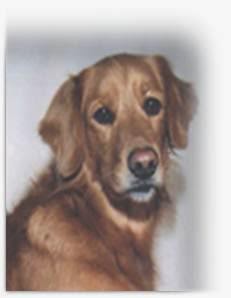
Lacey
This is the story of one such dog, a dog whose love reached far beyond her family.

Her name was Lacey. She was the smallest in a litter of 12 Golden Retrievers and I was the person blessed to acquire her. When I brought her home, she weighed less then 5 pounds. I didn't really have any "dog knowledge" and there was no Bark Park for me. I struggled in the beginning with a puppy that did normal puppy things, like chew and destroy, bite and bark, and who was almost uncontrollable to walk on a leash. The initial impact was not what I was expecting when I brought this cute little puppy home, with visions of playfulness, cuddling and companionship. In the beginning the stress and frustration almost caused an early demise of this little puppy, and it created tension and arguments within my family. It was 9 months into this relationship before I found the help that I needed.

The First Ripple was education and training. The result was the beginning of a bond between this puppy and myself that was to last a lifetime
.
The Second Ripple moved beyond me, now to my family. A dog who brought laughter, stress relief, and love to all of us.  A furry, four legged dog, who taught us how to love differently, unconditionally and with understanding and compassion.

The Third Ripple moved beyond my family as Lacey and I became involved in obedience competitions. She impressed those around her, in spite of the fact that she wasn't the "prettiest" Golden.

Photo by Maria Firkaly

The Fourth Ripple occurred when we learned about Therapy Dogs and went through the required testing to become a Registered Therapy dog team.

The Fifth Ripple brought changes in our whole county when Paws Hand Delivered therapy dogs became reborn.

The Sixth Ripple reached out farther than I ever could have imagined. Through our involvement with Paws Hand Delivered, countless peoples' lives were changed forever and smiles appeared everywhere she went. She was a born comedian and she left her paw prints on many hearts as she visited disadvantaged, sick, and elderly citizens throughout our county.

The Ripples that followed were bigger and more far reaching than I knew.

You see, when Lacey was not yet 9 years old she was diagnosed with a type of liver cancer. The vet informed me that she would probably only survive for about 2 weeks and would become very ill. It did not take long before people heard of her illness. My phone rang at least twice a day with someone, who I didn't even really know, telling me they were thinking of us and praying for us. They would share a story of how Lacey had an impact on them, or someone they loved. My mail box filled with cards of care and concern.

But Lacey wasn't done making Ripples. She defied the odds and she survived. No, "survived" isn't the right word. She lived fully for two years and two months beyond that diagnosis. Her coat remained shiny, and with her tail wagging she continued to visit people in nursing homes, hospitals, schools, and church camps. She continued to teach love and compassion beyond our own circumstances to those around her. She taught my veterinarian the power of the love and the strength of the bond between person and dog. I know this because he wrote me a letter after she passed away.

This year marks 6 years that Lacey has been gone, and I still will encounter someone who remembers her and they will share a story of how she touched a life.

None of this story would have been possible without the help of a friend who opened my eyes to what you can do with your dog. Not everyone has a friend like this. Trust me I struggled for a long time before I found the help that I needed.

Now, with Conneaut Lake Bark Park, the education, training, knowledge and opportunities are available to anyone and everyone. Not every dog is created to be a Therapy dog, but every dog has something to give, if people just understand how to achieve it.
  
With the creation of CLBP, and its resources, we have the ability to create healthy productive dog/person relationships, which then have the potential to reach out to people around us in ways beyond our imagination. We have the ability to reduce the number of dogs that are abandoned, put down or put into shelters, because we now have the means to educate, train and equip both dog and person.

The development of Doggie Day at the Bark Park has greatly enhanced this process. It provides the working person the opportunity to acquire a dog or puppy and to know that while they are at work, that furry family member is being cared for, and is learning manners and getting the exercise it requires. So at the end of the day when the person is tired from work, they can pick up their dog and the dog too has had a full day, and the two of them can return home to the enjoyment of each other's company.
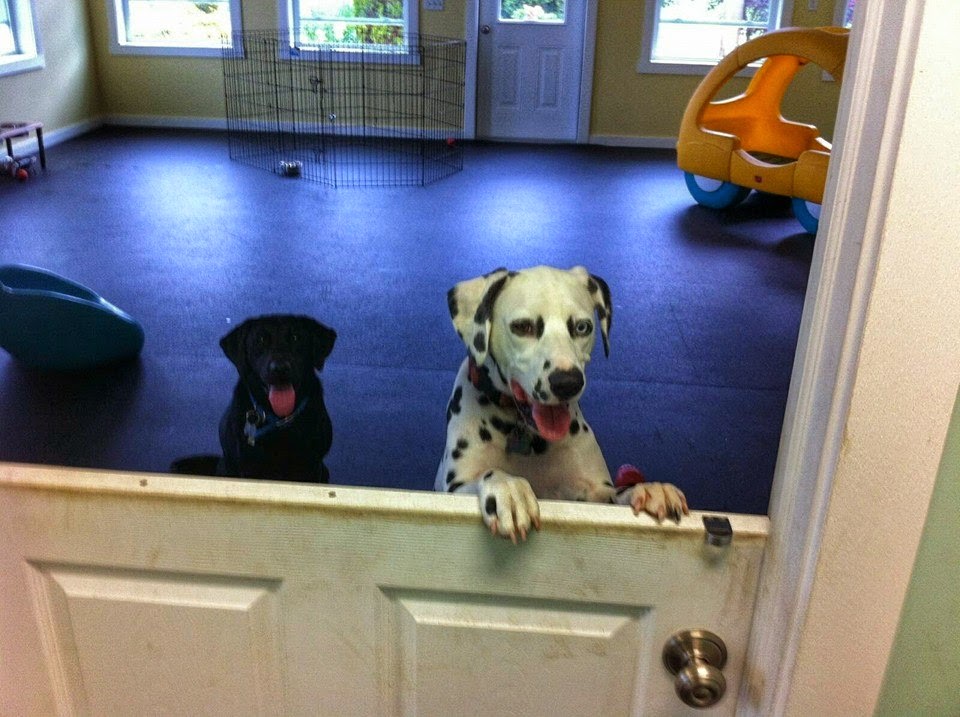
Pearl and Zoey at Doggie Day Care at the Conneaut Lake Bark Park.
Doggie day care also provides a secure place for the older dog, who might need that special attention, or for the dog of a person who must undergo medical treatment for long hours several days a week.

There are many dogs with the potential to impact on their owner, their family and their community.  With the services Conneaut Lake Bark Park can provide, who knows, we might go from making Ripples in a Pond, to as far reaching as a Wave in the Ocean.


Article by Robin Peterson

For more information about:

Thursday, June 19, 2014

Come Check out Lure Coursing at the Bark Park

Bark Park Lure Coursing Fun Day 


If your dog loves to run and chase, lure coursing may be the perfect sport.  To find out, come to our fun day sponsored by the Akron/Canton Terrier Club on Sunday June 22nd starting at 9am. For more event details visit the event on our website or the  Event flyer.


Find the Akron/ Canton Terrier Club on Facebook


Lure coursing began as a humane alternative to live game coursing in which dogs hunted live animals, like rabbits, by sight and not by scent.  In present day lure coursing, dogs chase an artificial lure pulled by a mechanical pulley around a course designed to mimic the zig zag movement of a fleeing rabbit.


The Importance of Poop part 3


Keeping an eye on your dog's behavior and well, their poop, is important.  This is the last article in the Importance of Poop series by our Dog House Facility manager Melanie Redford.


Tape Worm.
Tapeworms are long, flat worms that attach themselves to your dog’s (or cat's) intestines. A tapeworm body consists of multiple parts, or segments, each with its own reproductive organs. Tapeworm infections are usually diagnosed by finding segments—which appear as small white worms that may look like grains of rice or seeds—on the rear end of your dog, in your dog’s feces, or where your dog lives and sleeps.
There are several different kinds, or species, of tapeworms that can infect your dog, each with stage(s) in a different intermediate (in-between) host, which the dog eats to become infected. Dipylidium caninum is a tapeworm that uses fleas as its intermediate host, whereas Taenia and Echinococcus species use small rodents (mice, rats, squirrels), rabbits, or large animals (such as deer or sheep) as their intermediate hosts.

How will tapeworms affect my dog?
Dogs with tapeworm infections usually are not sick and do not lose weight from the worms. Contrary to popular belief, dogs that “scoot” on their rear ends are generally doing it for reasons other than having tapeworms, such as blocked or irritated anal sacs (pouches located in your dog’s rear end) or other skin inflammation of the rear.
How do I prevent my dog from getting tapeworms?
Image courtesy of Tina Phillips / FreeDigitalPhotos.net
Try to keep your dog from coming in contact with intermediate hosts that contain tapeworm larvae. Because fleas are an intermediate host for the most common kind of tapeworm, consistent, safe, and effective flea control is an essential prevention measure.
If you think your dog is infected with tapeworms, call your veterinarian for an appointment to get an accurate diagnosis and safe, effective treatment options.
To prevent Taenia and Dipylidium tapeworm infections in dogs, administer a monthly heartworm preventive that contains a drug specific for tapeworm infections. For more information about human infections, please visit www.cdc.gov/parasites.

Can humans be harmed by tapeworms?
Certain tapeworms found in dogs or cats may cause serious disease in humans. Fortunately, these tapeworms (Echinococcus species) are uncommon in the United States and are readily treated by prescriptions available from your veterinarian. There are rare reports of Dipylidium (a common tapeworm in pets) infections in children, but these infections are not associated with significant disease.

Hook Worms.
Similar to tapeworms and roundworms, hookworms are intestinal parasites that live in the digestive system of your dog (or cat). The hookworm attaches to the lining of the intestinal wall and feeds on your dog’s blood. Its eggs are ejected into the digestive tract and pass into the environment through your dog’s feces.
Larvae (young hookworms) that hatch from hookworm eggs live in the soil. These larvae can infect your dog simply through contact and penetration of the skin and through the dog eating the larvae when they ingest dirt or during their routine licking (cleaning).
How will hookworms affect my dog?
Hookworms suck blood and therefore cause internal blood loss. They are a serious threat to dogs, especially young puppies that may not survive the blood loss without transfusions. In older animals the blood loss may be more chronic, and the pet may have diarrhea and show weight loss.
If you think your dog is infected with hookworms, call your veterinarian to schedule an appointment for evaluation, diagnosis, and safe, effective treatment.
How do I prevent my dog from getting hookworms?
Similar to steps for prevention of other intestinal parasites, it is essential to keep your dog’s surroundings clean and prevent the dog from being in contaminated areas.
Image courtesy of tiverylucky / FreeDigitalPhotos.net
Puppies should be treated for hookworms at 2, 4, 6, and 8 weeks of age with a deworming medication you can get from your veterinarian. This frequent treatment schedule is recommended due to the very high rate of hookworm infection in newborn puppies. Most monthly heartworm preventatives include a drug to prevent to treat and prevent infections so additional deworming medications are usually not required if the dog is reliably treated with a heartworm preventive. Fecal examinations should be conducted 2 to 4 times during the first year of life and 1 to 2 times per year in adults. Nursing mothers should be treated along with their puppies.
Consult your veterinarian for safe and effective prevention and treatment options.
Can humans be harmed by hookworms?
Some hookworms of dogs can infect humans by penetrating the skin. This is most likely to occur when walking barefoot on the beach, working in the garden or other areas where pets may deposit feces. Infection usually results in an itching sensation at the point where the larvae enter the skin and visible tracks on the skin. The condition is easily treated but can cause mild to extreme discomfort in the affected person. One species of hookworm that infects dogs is known to develop in the human intestine, too, where it may cause disease.
Whip Worms
The whipworm is one of the four most common intestinal parasites of dogs. Whipworms reside in the cecum, which is inside your dog’s body where the small intestine and large intestine meet.
Dogs become infected with whipworms by swallowing infective whipworm eggs in soil or other substances that may contain dog feces.
How will whipworms affect my dog?
Dogs that are infected with a few whipworms may not have any signs of infection. More severe infections can cause bloody diarrhea. If an infected dog is not treated, then severe whipworm infection can cause serious disease and even death.
How do I prevent my dog from getting whipworms?
Whipworm infections can be prevented by removing your dog’s feces regularly from your yard. Because whipworms are sometimes more difficult to diagnose than other intestinal parasites, it is important that you take your dog to see a veterinarian at least annually for a properly conducted fecal examination (test of your dog’s feces).
Your veterinarian can prescribe safe and effective products that treat and control whipworm infections.


Wednesday, May 21, 2014

Top 5 Bark Park Events for June 2014

Top 5 Bark Park Events for June, 2014 


1.       Goods and Services Auction  - Even though this event is not scheduled until  Sunday, June 29th, at 1:30 at the Bark Park, we need everyone’s help to make this a big, successful  Bark Park community event.    This is a great opportunity for Bark Park members, pet therapy handlers, and everyone who has a dog to get involved in a fun community event.  Everyone has a talent, something they can do, a hobby, and favorite pastime.  Now you can share that special talent with others and help the Bark Park raise money to continue with community events, for improvements to the outside Bark Park property, to support community events,  for educational programs, etc.   A member of Paws Hand Delivered or the Bark Park  Board of Advisors will be calling all Bark Park members and PHD members to ask for a donation of a service or even the donation of an item. In addition, you must come to the event and see what bargains are available.  We already have people donating to paint a room, take people on a champagne pontoon boat ride around the lake, a kayak trip on the Geneva swamp, piano lessons, or admission for four to Splash Lagoon just to name a few.    A list of all items to be auctioned will be available the first week of June so we need your donation of a service or item as soon as possible.  If you already know of something to donate, just send me an email at petcem23@windstream.net and we can finalize the information.  So, get involved with this fun event.  And remember, be sure to come to the event and see who bids on the service you are donating, or come and see what bargain you can try to win or be entered in a few special drawings during the event.    For more information, contact Sue at 814-382-2478  .
     
2.        Community Flea Market – Clear out all those items in the attic and cellar that you are no longer using and purchase a table at the Community Flea Market, June 7th, at the Bark Park.  The cost is $12.00 for a table 18’x20’.   If you don’t want the hassle of having your own table, donate your items to the Bark Park table.  Donations can be dropped off every day at the trailer located behind the Dog House.  Finally, come and join the fun and find that hidden treasure waiting for you to discover.  Hours are 8:00 – 2:00, $.50 per person admission fee, refreshments available to purchase.


3.       Canine Carnival – Re-scheduled for June 7th, and will occur at the same time as the Community Flea Market.  General information and schedule available online here.

4.       Training classes begin outdoors at the Bark Park on Tuesday and Wednesday, June 3+4.  Contact Katara Peters, Groovy Pooch training,  at 814-763-5968 for more information and to sign up.

5.       Lure cursing is coming to the Bark Park on Sunday June 22nd.  Dock diving is also scheduled for that day.   Every dog is welcome to try this exciting dog performance sport.  More information will be available online or contact Melanie at the Dog House, 814-382-2267. 

Thursday, May 1, 2014

Why we should de-worm our dogs. Part 2: Heart Worms

Our Dog House manager, Melanie has contributed a series on the importance of de-worming and the importance of picking up the poop your dog leaves behind. 
Why we should de-worm our dogs. Part 2: Heart Worms

There are several types of worms that can affect our canine companions.
  • Round worms (being the most common)
  • Hook Worms
  • Whip Worms,
  • Tape Worms 
  • Heart Worm
 We will discuss Heart Worms  as part two of the series.

HEARTWORMS

Heartworms are common in dogs throughout the United States (cats can have them, too). They are among the most damaging parasites in dogs but they are almost 100 percent preventable. Heartworms are transmitted by mosquitoes and, once mature, they live in the heart and large blood vessels of the lungs. Adult heartworms can measure over one foot in length.

How will heartworms affect my dog?
The heartworm larvae deposited by the feeding mosquito eventually migrate to the chambers of the heart or into the vessels of the lungs. Once in the heart, the worms can affect blood flow throughout the body. Heartworm infection can affect many different organs of the dog—heart, lungs, kidneys, and liver, for example—so symptoms may be varied. Most commonly though, signs of heart or lung disease are present. A veterinarian may suspect that a dog has been infected if an active animal tires easily or shows shortness of breath or coughing. Early in the disease, dogs are often asymptomatic. Signs are often progressive over weeks to months and untreated, heartworm infection can be fatal.
Testing for heartworm infection
Blood tests are most commonly used to diagnose heartworm infection in dogs. An in-house screening test run by your veterinarian may be followed by a confirmatory blood test sent to an outside lab. Other tests frequently employed in determining the extent and severity of heartworm infection in a dog include blood tests of kidney and liver function, x-rays of the chest and an ultrasound (sonogram) of the heart. Once infection is confirmed, your veterinarian will discuss the most appropriate treatment for your pet.
How do I prevent my dog from getting heartworms?
Heartworms have been found in dogs in all 50 states so all dogs are at risk, even those animals that primarily live indoors. Fortunately, with medication, heartworm infection is almost always preventable.
Ask your veterinarian about heartworm prevention. Preventive treatment should begin at 8 weeks of age in puppies and after tests have been conducted in older dogs to determine if your dog has already been infected. An annual blood test should be run to confirm the dog continues to be negative for heartworms. If your dog does have heartworms, your veterinarian can advise you about treatment options.
Can humans contract heartworm disease?

Isolated and rare cases of human infection have been reported, however, the heartworm is generally not considered a risk to human health and direct transmission of heartworm from dogs to humans is not possible.